There is music whose origin you can set aside.
With Svidetelstvo o Smerti — Death Certificate — you cannot.
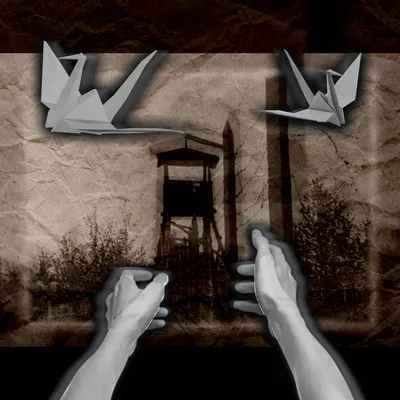
The band appeared in 1994 in Znamensk, Astrakhan region. Not merely a small provincial town but a ZATO, a closed administrative-territorial formation: Znamensk was the administrative and residential centre of the Kapustin Yar missile range. There were checkpoints at the entrance; you got in as a resident or with a pass. Around it, steppe. Next to it, the place where the first Soviet ballistic missiles were tested.
And somewhere inside that construction — built around the army, the missiles, the regime and a purpose assigned by the state — several people start recording music with titles like:
“Deader Than All the Dead.”
“After a Rotten Day.”
“The Roof Is Going.”
“In Spite of All Deaths.”
“Hello.”
That is almost finished literature already.
Not Moscow.
Not the Leningrad Rock Club.
Not a cultural capital with critics, producers and a proper scene.
A closed military town in the middle of the steppe.
And a tape recorder.
A town built for another purpose
Znamensk did not exist in order to produce a music scene.
The future town grew up around the Kapustin Yar missile range, established in 1946. In Soviet times the settlement was called Kapustin Yar-1, later becoming Znamensk; it received ZATO status in 1992. It was at this range that early Soviet ballistic missiles were tested, and in 1962 Kosmos-1 was launched from here.
So the official meaning of the place was perfectly clear.
Here the state built machines capable of flying thousands of kilometres.
And in the nineties several local people started assembling a different kind of transmitter.
Its range, at first, was considerably shorter.
1994
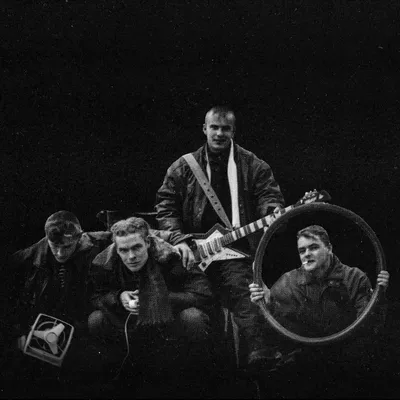
Svidetelstvo o Smerti was founded by Boris Kuzmin. Sources connect the name to a Polish band he read about during his army service. At first they played other people’s material; then their own songs appeared.
The earliest material is especially interesting in hindsight.
“He Who Weeps Is Alive” (Кто плачет, тот живёт) is dated 1994. In the current ICONIC PROMO edition it is described outright as a non-numbered album recorded during Kuzmin’s conscript service. The titles that would grow into the band’s whole language are already there: “I Gave Up on Everything”, “Among the Dead”, “Go Home”, “Your House”, “Good Night”.
The album title is almost too good for a debut:
he who weeps is alive.
Not “he who won.”
Not “he who changed the world.”
Not even “he who endured.”
The sign of life turns out to be the capacity to still react at all.
That is a fairly precise entry point into everything the band did afterwards.
Kuzmin’s protagonist is almost never a winner.
More often he is the one who, for some reason, keeps existing.
Varying degrees of shit sound
In the notes to a later vinyl edition of Hello, the band’s history is set out with no attempt to manufacture a handsome legend: the recordings were made in domestic conditions and the result was “9 albums with varying degrees of shit sound”. The same text describes rehearsals and recording sessions as events that regularly turned into drinking.
And that is an important detail.
Today lo-fi can be produced on purpose.
Buy a good microphone, a good interface, an expensive plugin, and then carefully ruin the sound so it seems recorded in a kitchen in 1999.
For Svidetelstvo o Smerti the chain of cause and effect was somewhat shorter.
They recorded the way they could.
So the dirt of the recording does not work here as a filter laid over the music.
It becomes part of the document.
You hear more than the song.
You hear the distance between the song and any possibility of recording it properly.
“Deader Than All the Dead”, 1999
Five years separate that first material from the album carrying a song that became one of the band’s central ones:
“When the Sun Goes Out.”
The release is dated 1999 and is part of the current official digital discography.
This is where one of the band’s defining features finally emerges.
Death here rarely looks like a large final event.
It is already distributed across the surrounding world.
Across the weather.
Across the room.
Across the state.
Across the body.
Across people who go on talking after there is apparently nothing left to talk about.
Which is why the title “Deader Than All the Dead” does not read as adolescent gothic hyperbole.
More like a strange administrative category.
Alive.
Dead.
Deader than all the dead.
Stamp.
Signature.
Next.
2000: the year the world becomes a climate
Three albums stand under the year 2000 in the discography:
“Winter.”
“After a Rotten Day.”
“Enemies of the People.”
Even the sequence of the titles is curious.
First the state of the world.
Then the state of a person after a day lived through.
Then someone is found who can be designated guilty.
There is a great deal of Soviet and post-Soviet vocabulary in this band, but it is used as though the original machine had broken down.
Heroes.
Enemies.
War.
Ranks.
The people.
All the words still exist.
But the confidence in the frame of reference that once gave them meaning has gone.
So a person is left almost alone among enormous nouns.
“The Roof Is Going”, 2001
After that the external collapse becomes internal.
“The Roof Is Going” (Едет крыша, the Russian idiom for losing your mind) is a 2001 album, eleven songs. Among the titles are “Anyone But Me” and “Always Alive”.
The expression itself is remarkable because in it psychological ruin turns into something close to a household fault.
Not a tragic “I am losing my mind.”
The roof has just gone.
Like the slate.
The wiring.
The lift.
The country.
We’ll sort it out later.
That intonation is very Russian in general: a catastrophe is acknowledged only once it becomes inconvenient to use.
“In Spite of All Deaths”
On the next album the language of resistance becomes almost comic.
Sitting side by side in the track list:
“Instead of Me”,
“The Shit-Arsed Fairy”,
“I Have a Head”,
“Those Who Came Back from the War”,
“Nothing Is Needed”,
“A Ragged Hole”,
“Day Off”,
“Vagrant”.
This makes it very clear why the band is hard to file under the tidy word “depressive”.
Pure depression tends towards stillness.
Whereas Svidetelstvo always keeps some mocking vitality.
The man is lying in the filth, but he can still call the filth filth.
He can still swear.
He can still laugh at his own lot.
He can still say: in spite of it.
That is not optimism.
Optimism assumes a belief that things ahead will get better.
Nothing of the kind is required here.
It is enough that you have not yet disappeared.
“Hello”
And then comes what may be the most complete point in the whole story.
On 11 June 2001, Hello is recorded.
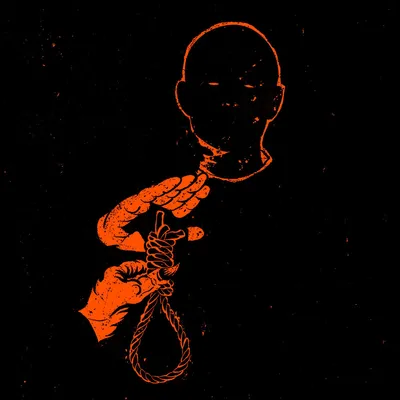
Boris Kuzmin — vocals, guitar and keys; Mikhail Tselishchev — guitar; Konstantin Rukavanov — bass; Yevgeny “Botsman” Polovinkin — drum machine. Ten songs on the record: “A Shat-Upon Hero”, “Hello”, “Submarine”, “Japanese Fairy Tale”, “Autumn Delirium”, “On His Own”, “From Outside”, “Counting Rhyme”, “The Noose”, “A Dog’s Death for a Dog”.
Just look at the titles.
As though the contents of a mind after the collapse of a large picture of the world had been tipped out onto a table.
A hero.
A submarine.
A fairy tale.
Delirium.
Solitude.
Something from outside.
A children’s counting rhyme.
A noose.
A dog.
And in the middle of all that:
“Hello.”
The most ordinary human word there is.
Perhaps that is exactly why it works.
When the surrounding world is filled with death, war, absurdity and disintegration, the most unexpected gesture turns out not to be a manifesto.
But addressing another person.
Hello.
I’m here.
Are you there?
A shat-upon hero
And the album opens with a song whose title would be hard to improve on even with the full ambition of the Russian literary canon behind you.
“A Shat-Upon Hero.”
It is very nearly the perfect post-Soviet character.
The hero remained.
The heroism ended.
He still has the posture, the convictions, the enemies, the past, possibly even the wish to march somewhere further.
Only reality has already filed its comment.
The song contains a short formula:
“your house of reeds / burned down yesterday”.
The frightening part is not that the house burned down.
It is what follows:
the hero does not know it yet.
And there, it seems, is one of the band’s central subjects altogether.
The catastrophe happens before a person manages to update his picture of the world.
The system has already fallen.
The country is already a different one.
The war has already ended, or a new one has started.
The ideology has already turned into scenery.
The house has already burned down.
And for some time yet a person goes on acting according to yesterday’s instructions.
Hence the tragedy.
Hence the comedy.
And that is why the hero is shat upon rather than fallen.
A fallen hero gets a monument.
A shat-upon one goes on living.
Not gloom, but the absence of illusion
It is easy to file Svidetelstvo o Smerti in a box marked “Russian doomer post-punk”.
The internet did later give the band a new audience, and the contemporary return happened largely after the original break-up. Sources record renewed interest in the 2010s, the band’s return in the 2020s and new concerts.
But the word “doomer” simplifies a few things.
Because this music is not only despondency.
There is anger in it throughout.
Black humour.
Political disgust.
Absurdity.
Flesh.
Alcohol.
Dogs.
War.
Children’s forms — the fairy tale, the counting rhyme — into which adult foulness suddenly crawls.
And above all a very strange tenderness towards the human being, precisely because the human being here almost never matches the elevated version of himself.
He is weak.
Ridiculous.
Frightened.
Drunk.
Angry.
Sometimes repulsive.
But alive.
He who weeps is alive.
Nine certificates
Read the main albums in order and you get something closer to a sequence of states than a discography:


1994 — “He Who Weeps Is Alive”
Life is still defined by the capacity to feel.
1999 — “Deader Than All the Dead”
Death stops being an event and becomes an environment.
2000 — “Winter”
The environment becomes a climate.
2000 — “After a Rotten Day”
The catastrophe shrinks to the size of an ordinary day.
2000 — “Enemies of the People”
A language of collective accusation appears.
2001 — “The Roof Is Going”
The external ruin moves inside the head.
2001 — “In Spite of All Deaths”
A stubborn resistance appears, with no promise of victory.
2001 — “Hello”
In the middle of all this, a person addresses another person again.
“Death Certificate”
And finally the band names an album after itself, as though signing off on the accumulated material. Sources disagree on whether the last of the old recordings dates to 2001 or 2002, which for a half-underground archive like this is almost fitting.
This is an interpretation, of course.
But a good discography sometimes lets itself be read that way.
A band that duly croaked
An old account of the group’s history contains a virtually perfect epitaph:
after the domestic recordings, the drinking and the changes of line-up, “the band duly croaked”.
The phrase is magnificent precisely for its absence of tragic pathos.
Croaked.
It happens.
People grew up.
Work.
Families.
Money.
Distances.
Life made its adjustments.
The end.
Apart from one technical problem.
The recordings remained.
The internet is bad at burying things
Years later they began circulating in a world they were not made for at all.
Not a cassette from Znamensk handed to someone you know.
Spotify.
YouTube.
Algorithmic recommendations.
People in other countries discuss Boris Kuzmin on Reddit, dig up old live recordings, try to translate the lyrics, and discover that the author of these songs is in fact still making music.
The band returned to playing live. In 2025 a live release and a new single, “On the Roof”, came out; and on 29 May 2026 the previously unreleased “That’s Not How It Happens (1998)” appeared on streaming. The band’s official page also announces concerts for 2026.
The result is a rather strange loop in time.
Music from a closed city, recorded in domestic conditions for an almost non-existent audience, turns out a quarter of a century later to be available to nearly anyone anywhere in the world.
The Kapustin Yar missiles were designed specifically so that they could fly a long way.
These songs were not.
They flew anyway.
Signal
That is probably why Svidetelstvo o Smerti is interesting as more than a band.
It is a document about the capacity of culture to arise where nobody built any infrastructure for it.
You can have no scene.
No proper studio.
No large city.
No music industry around you.
You can record nine albums with, to use their own formulation, varying degrees of shit sound.
Then disappear.
And discover, decades later, that someone unknown, living thousands of kilometres away and possibly born after the band broke up, pressed Play.
He knows nothing about the room where the tape recorder stood.
He never saw Znamensk in the nineties.
He does not know the people on the recording.
But the signal got through.
And there is something in that which is the opposite of a death certificate.
More like evidence that certain things are very reluctant to die.
P. S. Boris Kuzmin runs a small YouTube channel. He simply sits there with an acoustic guitar and sings his songs. After all of this history, it is especially strange to see how little actually stands between a song and a person: a room, a guitar and a working microphone.